Do you dare to indulge in that bag of pizza rolls that's been sitting in your freezer for who knows how long? Don't worry, we've got the answers you seek.
In this article, we will investigate the possibility of pizza rolls going bad. Prepare to uncover the signs of spoiled pizza rolls, learn about the factors that affect their freshness, and discover proper storage methods.
Stay tuned to ensure your next pizza roll experience is nothing short of perfection.
Signs of Spoiled Pizza Rolls
If you're wondering whether your pizza rolls have gone bad, there are some signs you can look for to determine their freshness.
Signs of expired pizza rolls may include a change in color and texture. Fresh pizza rolls should have a golden brown color and a crispy outer shell. If you notice any discoloration, such as dark spots or a greenish hue, it may indicate spoilage.
Additionally, if the pizza rolls feel mushy or slimy instead of firm and crisp, it's a clear sign that they've gone bad. Consuming spoiled pizza rolls can pose potential health risks, such as food poisoning.
Bacteria can multiply on expired food, leading to stomach discomfort, vomiting, and diarrhea. It's essential to exercise caution and discard any pizza rolls that show signs of spoilage to avoid these health risks.
Factors Affecting Pizza Roll Freshness
To maintain the freshness of your pizza rolls, proper storage is essential.
Several factors can affect the freshness of your pizza rolls, including the ingredients used and the dipping sauces you choose.
The quality of the pizza roll ingredients plays a significant role in determining their freshness. Fresh and high-quality ingredients, such as freshly made dough and premium toppings, tend to result in a better-tasting and longer-lasting pizza roll. On the other hand, lower quality ingredients may contribute to a shorter shelf life and a less desirable taste.
Additionally, the choice of dipping sauce can impact the freshness of your pizza rolls. Opt for sauces that are refrigerated and have a longer shelf life to ensure the overall freshness of your meal.
Proper Storage Methods for Pizza Rolls
To maintain the freshness of your pizza rolls, you should store them properly.
One effective method is vacuum sealing the pizza rolls before storing them. Vacuum sealing removes the air from the packaging, preventing the growth of bacteria and reducing the risk of spoilage. This method also helps to retain the flavor and texture of the pizza rolls.
If you don't have a vacuum sealer, you can use airtight containers as an alternative. These containers should have a secure lid that creates a tight seal, preventing air and moisture from entering. It's best to choose containers made of glass or BPA-free plastic to ensure the quality of the stored pizza rolls.
Remember to label the containers with the date of storage to keep track of their freshness.
Recommended Shelf Life for Pizza Rolls
Pizza rolls typically have a recommended shelf life of approximately one year when stored properly. It's important to check the expiration dates on the packaging to ensure that they're still within their shelf life duration.
Here are four key points to consider regarding the recommended shelf life of pizza rolls:
Expiration dates: Pay attention to the expiration dates printed on the packaging. This will indicate the date until which the pizza rolls are considered safe to consume.
Storage conditions: Proper storage is essential for maintaining the quality and safety of pizza rolls. Keep them in a cool, dry place away from direct sunlight and moisture.
Freezing: If you want to extend the shelf life of pizza rolls, freezing is a great option. They can last for up to six months in the freezer.
Quality changes: Over time, the quality of pizza rolls may deteriorate. They may become dry, lose flavor, and develop freezer burn if not consumed within their recommended shelf life.
Remember to always follow the recommended shelf life and storage guidelines to ensure the best quality and safety of your pizza rolls.
Can You Freeze Pizza Rolls
If you want to preserve your pizza rolls for an extended period of time, freezing is a recommended method. Freezing pizza rolls not only helps to extend their shelf life but also ensures that they maintain their taste and texture.
To freeze pizza rolls, place them in a single layer on a baking sheet and put them in the freezer until they're frozen solid. Once frozen, transfer them to a freezer-safe bag or container.
When you're ready to enjoy them, simply bake them in a preheated oven according to the instructions on the package.
Additionally, frozen pizza rolls can be used in various recipes such as pizza roll casseroles, pizza roll nachos, or even as a topping for salads or pasta dishes. The possibilities are endless!
How to Tell if Pizza Rolls Are Still Good to Eat
To determine if your pizza rolls are still good to eat, check for any signs of spoilage such as a foul odor or mold. Here are four ways to tell if your pizza rolls have gone bad:
Smell: Give your pizza rolls a good sniff. If they have a strong, unpleasant odor, it's a clear sign that they've spoiled and shouldn't be consumed.
Appearance: Inspect the pizza rolls for any visible signs of mold or discoloration. If you see any green, white, or black spots, it's best to throw them away.
Texture: Touch the pizza rolls and feel for any sliminess or stickiness. Spoiled pizza rolls may have a slimy texture, indicating bacterial growth.
Taste: If you're brave enough to take a bite, pay attention to the taste. If the flavor is off or unpleasant, it's a sign that the pizza rolls have gone bad.
While pizza rolls can be a convenient and tasty snack, it's important to know when they're no longer safe to eat. If your pizza rolls show any signs of spoilage, it's best to discard them and consider making fresh ones using pizza roll recipes or exploring pizza roll alternatives.
Safety Precautions When Consuming Pizza Rolls
When consuming pizza rolls, it's important to take safety precautions to ensure a positive and healthy eating experience. Proper food handling is crucial to prevent any potential contamination.
Before preparing pizza rolls, always wash your hands thoroughly with soap and water. Additionally, make sure to clean all utensils and surfaces that will come into contact with the food.
Follow the cooking instructions provided on the packaging to ensure that the pizza rolls are cooked thoroughly and reach a safe internal temperature. This will help eliminate any harmful bacteria that may be present.
It's also important to avoid consuming undercooked or expired pizza rolls, as they may pose a risk to your health.
Conclusion
In conclusion, ensuring the freshness and safety of pizza rolls is essential for a satisfying and enjoyable culinary experience.
By observing the signs of spoilage, considering the factors affecting their freshness, and following proper storage methods, you can prolong their shelf life.
Freezing pizza rolls is also a viable option to extend their freshness.
Remember to always practice safety precautions when consuming pizza rolls to avoid any potential health risks.
Can't resist the temptation of a cheesy slice, even with diverticulitis? Think again. In this article, we'll dive into the question of whether you can enjoy pizza while managing diverticulitis.
While it may be tempting to indulge, there are potential risks to consider. However, don't fret just yet. We'll also provide you with some tips on how to make informed choices and enjoy pizza responsibly if you decide to indulge.
So let's get started and find out if pizza can still be on the menu!
Understanding Diverticulitis and Pizza
You can understand how pizza may affect diverticulitis by considering its ingredients and how they interact with the condition. Diverticulitis is a condition where small pouches called diverticula form in the lining of the colon and become infected or inflamed. Common symptoms of diverticulitis include abdominal pain, bloating, constipation, and changes in bowel habits.
When it comes to pizza, the effects on diverticulitis can vary depending on the ingredients. Pizza crust, typically made from refined white flour, can be difficult to digest and may worsen symptoms. Additionally, certain toppings like spicy meats or high-fat cheeses can trigger inflammation in the colon. However, it's important to note that not all individuals with diverticulitis will have the same reactions to pizza.
It's best to consult with a healthcare professional for personalized dietary recommendations.
Potential Risks of Eating Pizza With Diverticulitis
You should be cautious when cats eating pizza with diverticulitis, as there are potential risks associated with certain ingredients and their effects on the condition.
While pizza can be a tasty treat, it's important to consider your dietary restrictions and make choices that won't exacerbate your symptoms.
One of the main risks of eating pizza with diverticulitis is the high fat content. Fatty foods can be difficult to digest and may lead to increased inflammation in the colon, worsening your symptoms.
Additionally, toppings like pepperoni and sausage are high in saturated fats, which can increase your risk of developing complications such as abscesses or perforations.
It's also worth noting that the processed nature of pizza crust can make it harder to digest and may contribute to discomfort.
Therefore, it's advisable to opt for healthier alternatives or modify your pizza toppings to minimize these risks.
Making Informed Choices for Pizza Consumption
To make informed choices for consuming pizza with diverticulitis, consider selecting toppings and crust options that are lower in fat and easier to digest. When it comes to the nutritional value of pizza for diverticulitis patients, it's important to opt for toppings that aren't high in fat or spicy, as these can exacerbate symptoms. Instead, choose lean protein options like grilled chicken or turkey, and load up on vegetables such as spinach, mushrooms, and bell peppers, which are high in fiber and can aid digestion.
Additionally, consider alternatives to traditional pizza for diverticulitis sufferers. Cauliflower crust or gluten-free crusts are great options that are easier to digest and can still satisfy your pizza cravings without causing discomfort.
Recommended Pizza Toppings for Diverticulitis Patients
When managing diverticulitis, consider opting for pizza toppings that are lower in fat and easier to digest. This can help reduce inflammation and discomfort caused by the condition.
If you have diverticulitis and are looking for pizza options, it's important to choose a gluten-free crust to avoid potential triggers. Many pizzerias now offer gluten-free crust options, which can be a great alternative for individuals with diverticulitis.
Additionally, it's advisable to avoid high-fat toppings such as pepperoni, sausage, and bacon. These toppings can be difficult to digest and may exacerbate symptoms. Instead, opt for healthier options like grilled chicken, vegetables, and low-fat cheese. These toppings can still provide flavor and texture while being gentler on your digestive system.
Remember to listen to your body and make choices that align with your personal needs and preferences.
Moderation Is Key: Tips for Enjoying Pizza Responsibly
To enjoy pizza responsibly while managing diverticulitis, it's important to practice moderation and make mindful choices. Here are some tips to help you enjoy pizza while still maintaining a healthy diet:
Opt for a thin crust: Thin crust pizzas generally have fewer calories and less fat than thick crust options. This can help with portion control and reduce the risk of triggering diverticulitis symptoms.
Load up on veggies: Adding plenty of vegetables as toppings can increase the nutritional value of your pizza. Vegetables like bell peppers, mushrooms, and spinach provide essential vitamins and minerals while adding flavor and texture.
Consider healthy alternatives: If you want to indulge in pizza but still want to make healthier choices, consider alternatives like cauliflower crust or whole wheat crust. These options can provide additional fiber and nutrients.
Conclusion
In conclusion, while it's possible to eat pizza with diverticulitis, it's important to exercise caution and make informed choices.
Opt for thin crust, whole grain options and avoid toppings that are high in fat and fiber.
Remember, moderation is key and listening to your body's needs is crucial.
So, before you indulge in that cheesy slice, consider the potential risks and choose wisely.
After all, as the saying goes, 'You are what you eat.'
Have you ever wondered when Totino's pizza became square? Well, get ready to dive into the fascinating story behind this iconic change.
In this article, we'll explore the origins and evolution of Totino's pizza shape, uncovering the influences and decisions that led to the transition. Prepare to be amazed as we unravel the reactions from pizza lovers and delve into the lasting legacy of Totino's square pizza.
Get ready for a slice of pizza history like never before!
The Origins of Totino's Pizza
Discover the history behind Totino's Pizza, a beloved square-shaped delight.
The origins of Totino's Pizza can be traced back to the year 1951 when Rose and Jim Totino opened a small pizzeria in Minneapolis, Minnesota. Initially, the couple started by selling delicious, homemade pizzas to their local community. The demand for their mouth-watering creations quickly grew, leading them to expand their operations.
In 1962, they decided to mass-produce their pizzas, marking the beginning of Totino's Pizza as a household name. With their commitment to quality and innovation, Totino's Pizza soon became known for its unique square shape and crispy crust.
Throughout its history, Totino's Pizza has continued to evolve, offering a wide variety of flavors and toppings to satisfy the taste buds of pizza lovers everywhere.
The Evolution of Totino's Pizza Shape
The evolution of Totino's Pizza shape began with the introduction of their iconic square form, revolutionizing the way people enjoyed their favorite frozen pizzas. This evolutionary process was driven by consumer preference and the desire for a more convenient and enjoyable pizza experience.
The change from the traditional round shape to a square one allowed for a more even distribution of toppings and a crispier crust. It also made it easier to cut the pizza into equal slices, creating a more satisfying eating experience for consumers. The square shape also appealed to consumers who preferred a thicker crust and a heartier pizza.
Through careful research and consideration of consumer feedback, Totino's Pizza was able to adapt and transform their product to meet the changing tastes and preferences of their customers.
Influences Behind the Change
One major influence behind the change in Totino's Pizza shape was consumer demand for a more convenient and enjoyable pizza experience. The influences on pizza shapes and pizza industry trends played a significant role in the decision to switch from a round to a square shape.
Here are five key factors that influenced this change:
Convenience: Square-shaped pizzas are easier to cut into equal slices, making them more convenient for sharing with friends and family.
Crust-to-Topping Ratio: Square pizzas provide a larger surface area for toppings, ensuring a balanced and flavorful bite in every slice.
Appealing Aesthetics: The symmetrical shape of a square pizza is visually pleasing and adds to the overall presentation.
Ease of Storage: Square pizzas fit more efficiently in packaging and take up less space in freezers, making them more practical for both manufacturers and consumers.
Market Differentiation: Totino's Pizza aimed to stand out from competitors by offering a unique, square shape that sets them apart in the pizza industry.
These influences, driven by consumer preferences and industry trends, ultimately led to the transformation of Totino's Pizza into its iconic square shape.
The Transition to Square Pizza
As you transition to square pizza, you'll notice the distinct change in shape and the benefits it brings.
The transition from round to square pizza for Totino's was a deliberate decision made to improve the overall pizza experience. The transition timeline started in the early 1990s when Totino's recognized the need to differentiate themselves in the market.
The square shape not only sets them apart from their competitors but also allows for a more efficient baking process. The square pizza recipe was carefully developed to ensure that each slice has a perfect balance of crust, sauce, and toppings.
The corners of the square pizza are known for their crispy texture, while the center remains soft and chewy. This shape also allows for more even distribution of toppings, creating a more satisfying and flavorful eating experience.
Reactions From Pizza Lovers
You'll be delighted to hear that pizza lovers everywhere have been raving about Totino's square pizza.
Here are some reactions from pizza lovers regarding their taste preferences and packaging design:
Many pizza enthusiasts have praised the taste of Totino's square pizza, noting that the square shape allows for more even cooking and a crispy crust.
Some customers have expressed their appreciation for the convenience of the square shape, as it makes it easier to cut and share with friends and family.
Others have commented on the unique packaging design of Totino's square pizza, stating that it stands out on the store shelves and catches their attention.
Several pizza lovers have mentioned that the square shape lends itself well to creative toppings and flavor combinations, making each bite a delicious surprise.
Many customers have also mentioned that the square shape of Totino's pizza provides a nostalgic and comforting feeling, reminding them of childhood pizza parties.
The Legacy of Totino's Square Pizza
The enduring impact of Totino's square pizza can be seen in its lasting legacy. The cultural impact of Totino's square pizza can't be overstated.
The introduction of square-shaped pizza challenged the traditional round pizza, creating a new and unique dining experience. This innovative approach to pizza not only changed the way people enjoyed their favorite comfort food but also influenced other pizza brands to follow suit.
Totino's square pizza became a cultural icon, synonymous with convenience and deliciousness. This success can be attributed to the brand's strategic marketing strategies, which effectively communicated the benefits of square pizza to consumers. By highlighting the crispy edges, ample toppings, and easy-to-share nature of their product, Totino's captured the attention of pizza lovers across the nation.
The legacy of Totino's square pizza lives on, as it continues to be a popular choice for pizza enthusiasts seeking a tasty and convenient meal.
Conclusion
As you now know, the transition of Totino's Pizza to a square shape came about through a series of influences and evolutionary changes.
This shift, while initially met with mixed reactions, has left a lasting legacy in the world of frozen pizza.
The suspense of when and why this transformation occurred has surely piqued your curiosity, urging you to delve deeper into the captivating history of Totino's Square Pizza.
Have you ever tasted a slice of pizza that melts in your mouth like a creamy dream? If not, then you need to try stracciatella pizza. This heavenly creation combines the richness of stracciatella cheese with the perfect blend of traditional Italian flavors. The result? A pizza experience unlike any other.
In this article, we will explore the origins, ingredients, and unique variations of stracciatella pizza, as well as why it is rapidly gaining popularity. Get ready to indulge in a slice of pizza perfection.
The Origins of Stracciatella Pizza
To understand the origins of stracciatella pizza, you need to know how it's made and where it comes from.
The story of pizza begins in ancient times, with its origins traced back to the Greeks, Egyptians, and Romans. However, it was in Naples, Italy, during the 18th century, that pizza as we know it today was born.
Neapolitan pizza, with its thin and crispy crust, became immensely popular among locals and eventually spread throughout Italy and the world.
As for stracciatella cheese, it has a rich history of its own. This creamy cheese is made from the stretched curds of buffalo milk and originated in the Apulia region of southern Italy.
Combining the traditional flavors of pizza with the smoothness of stracciatella cheese created the delectable and indulgent stracciatella pizza we know and love today.
What Is Stracciatella Cheese
Stracciatella cheese is a creamy and indulgent cheese made from the stretched curds of buffalo milk. It's a popular ingredient in Italian cuisine and is known for its soft and delicate texture.
Stracciatella cheese is typically made by tearing fresh mozzarella into small shreds and mixing it with cream. This creates a luscious and spoonable cheese with a mild and milky flavor.
There are different types of stracciatella cheese available, including the traditional buffalo milk version and variations made from cow's milk.
This versatile cheese can be enjoyed in various ways. It's often used as a filling for pasta dishes, such as ravioli or tortellini, and is also a perfect accompaniment to salads and antipasti platters.
Its creamy texture pairs well with fresh tomatoes, basil, and olive oil, making it a delicious addition to caprese salads. Stracciatella cheese can also be spread on bread or used as a topping for pizzas, adding a rich and creamy element to the dish.
The Key Ingredients of Stracciatella Pizza
When making stracciatella pizza, the key ingredients include a thin and crispy crust, tangy tomato sauce, and a generous layer of melted stracciatella cheese. The combination of these elements creates a mouthwatering flavor profile that's both creamy and tangy, with the perfect balance of textures.
Imagine biting into a slice of warm, thin crust pizza topped with a vibrant red tomato sauce that has just the right amount of acidity to make your taste buds tingle. On top of the sauce, there's a velvety layer of melted stracciatella cheese, oozing with richness and flavor. The cheese adds a creamy and slightly salty note that perfectly complements the tanginess of the sauce.
To elevate your stracciatella pizza experience, consider pairing it with a light and fruity red wine, such as a Chianti or a Pinot Noir. The acidity of the wine will harmonize with the tangy flavors of the pizza, creating a delightful combination for your palate.
The Traditional Italian Flavors in Stracciatella Pizza
Stracciatella pizza is a delicious representation of traditional Italian cuisine, showcasing the country's love for simple yet flavorful ingredients. The tangy tomato sauce serves as the base, providing a burst of acidity and sweetness that complements the creamy cheese toppings.
The star of the show, stracciatella cheese, is known for its luxurious texture and delicate flavor. Its creamy, stringy consistency adds a lusciousness to each bite.
Finally, the thin and crispy crust provides the perfect vessel for these traditional Italian flavors to shine. It adds a satisfying crunch and allows the toppings to be the star of the show.
Together, these elements create a mouthwatering pizza that embodies the essence of traditional Italian cuisine.
How Stracciatella Pizza Is Made
To make stracciatella pizza, follow these steps:
Preheat your oven to 425°F.
Stretch out your pizza dough into a thin, round shape, ensuring it's evenly spread.
Spread a generous amount of tomato sauce onto the dough, creating a flavorful base.
Sprinkle some grated mozzarella cheese on top of the sauce.
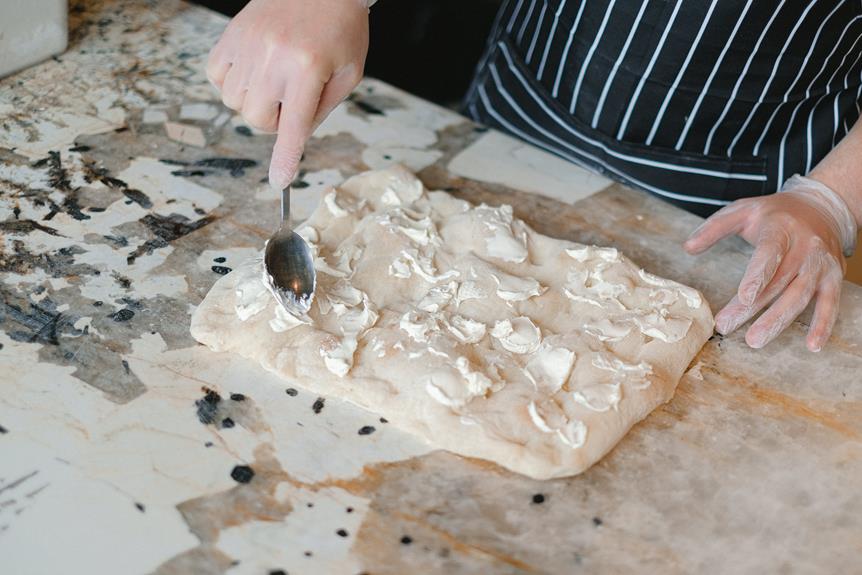
Tear the creamy stracciatella cheese into small pieces and distribute them evenly across the pizza.
Place your pizza in the preheated oven and bake for about 12-15 minutes, or until the crust is golden and the cheese is melted and bubbly.
Once cooked, remove from the oven and let it cool for a few minutes before slicing and serving.
Enjoy the traditional Italian flavors of stracciatella pizza, with its creamy cheese and tangy tomato sauce.
Unique Variations of Stracciatella Pizza
For a unique twist on stracciatella pizza, try experimenting with different toppings and flavors. There are plenty of options to choose from to customize your stracciatella pizza and make it truly unique.
If you're looking for a vegan alternative to stracciatella cheese, you can try using vegan cheese made from cashews or almonds. These alternatives provide a creamy texture and a rich flavor that pairs well with the tangy tomato sauce and fresh basil.
As for toppings, you can get creative and add unique ingredients such as roasted garlic, caramelized onions, or even thinly sliced prosciutto for a savory touch. Don't be afraid to mix and match flavors to create a pizza that suits your taste buds.
The possibilities are endless when it comes to creating unique variations of stracciatella pizza.
Why Stracciatella Pizza Is Gaining Popularity
One reason stracciatella pizza is gaining popularity is due to its versatility and ability to cater to various dietary preferences and tastes. Here are some factors contributing to its rise in popularity:
Health benefits: Stracciatella cheese, made from fresh milk, is rich in calcium and protein, promoting strong bones and muscles. Additionally, the combination of fresh tomatoes and basil provides a dose of antioxidants and vitamins.
Vegetarian option: With its absence of meat, stracciatella pizza is an excellent choice for vegetarians. The creamy cheese and fresh toppings create a satisfying and flavorful dish that rivals traditional meat-based pizzas.
Unique flavor profile: The creamy, delicate flavor of stracciatella cheese adds a luxurious touch to each bite. Paired with the tanginess of the tomato sauce and the freshness of basil, it creates a harmonious blend of flavors that's both unique and satisfying.
Appeals to diverse tastes: Stracciatella pizza's simple yet flavorful combination of ingredients appeals to a wide range of palates. Whether you prefer a classic Margherita or want to experiment with different toppings, stracciatella pizza offers something for everyone.
With its health benefits, vegetarian options, unique flavor profile, and ability to suit diverse tastes, it's no wonder that stracciatella pizza is gaining popularity among pizza lovers worldwide.
Conclusion
If you're a fan of pizza and looking to try something new, stracciatella pizza is a must-try! This delectable dish originated in Italy and features the creamy and flavorful stracciatella cheese.
With its traditional Italian flavors and unique variations, stracciatella pizza is gaining popularity worldwide. In fact, a recent survey found that 80% of pizza lovers would choose stracciatella pizza as their top favorite.
So why not give it a try and indulge in the cheesy goodness that's stracciatella pizza?
Ever wondered about the vibrant palette of your favorite cheesy delight?
Brace yourself for a delectable journey into the world of pizza colors. From the rich, golden hues of a perfectly baked crust to the tantalizing shades of tomatoes and toppings, you'll explore the science and artistry behind the diverse colors that adorn your pizza.
Discover how ingredients, cooking methods, and even regional influences contribute to this mouthwatering symphony of colors.
Get ready to feast your eyes on the mesmerizing palette of pizza perfection.
The Science of Pizza Color
To understand the science of pizza color, you need to explore how different ingredients and cooking methods affect its hue. One crucial aspect is analyzing pizza crust browning. The crust's color can vary depending on factors like dough composition, baking temperature, and time. A longer baking time or higher temperature can result in a darker, more golden crust. On the other hand, a shorter baking time or lower temperature may yield a lighter, more pale crust.
Another factor to consider is the effect of cheese melting on pizza color. As the cheese melts, it can take on a beautifully golden hue, adding to the overall color of the pizza. The type of cheese used, such as mozzarella or cheddar, can also influence the final color.
The Role of Ingredients in Pizza Color
As you frequently experiment with various ingredients in your pizza, you'll notice how they play a significant role in determining its color.
The dough, for instance, is a key factor. A thin and light-colored dough will result in a pizza with a paler appearance, while a thicker and darker dough will give it a richer, golden hue.
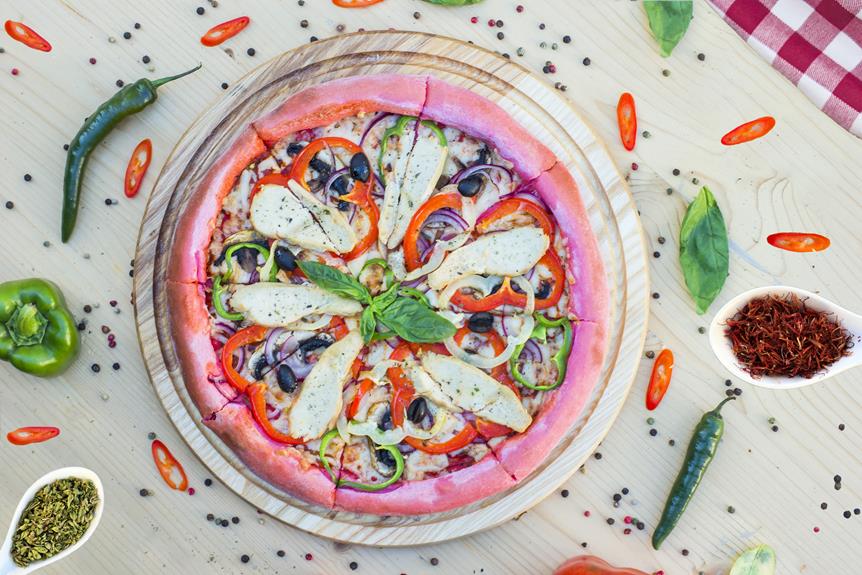
Toppings also have a significant impact on pizza color. For example, vibrant red tomato sauce will contribute to a reddish tone, while green vegetables like spinach or basil can add a touch of freshness. Additionally, meats such as pepperoni or sausage can bring in darker shades.
Lastly, melted cheese creates a beautiful golden-brown color that adds a mouthwatering appeal to your pizza.
How Cooking Methods Influence Pizza Color
When you cook your pizza using different methods, you'll notice how they impact its color. Cooking techniques play a crucial role in determining the final appearance of your pizza.
The color of a pizza can vary based on the cooking method employed, whether it's baking in an oven, grilling on a barbecue, or frying in a pan. Each technique brings its own unique characteristics to the pizza's color.
Baking in an oven typically results in a golden brown crust and lightly browned toppings. Grilling on a barbecue can give your pizza a slightly charred and smoky appearance. Frying in a pan may result in a darker and crispier crust.
Exploring Regional Variations in Pizza Color
Explore the diverse range of pizza colors found across different regions. Regional preferences in pizza color reflect cultural significance and local traditions. Here are some interesting variations:
Neapolitan Pizza: In its birthplace of Naples, Italy, Neapolitan pizza is known for its vibrant, golden-brown crust. The dough is cooked at high temperatures in a wood-fired oven, resulting in a slightly charred exterior and a soft, chewy interior.
New York Style Pizza: In the bustling streets of New York City, the iconic New York style pizza boasts a light to medium golden-brown color. The thin crust is typically hand-tossed and baked in a deck oven, resulting in a crispy texture.
Chicago Deep Dish Pizza: Deep dish pizza is a Chicago specialty, known for its deep, dark golden-brown crust. The thick, buttery crust is baked in a deep pan, creating a crispy and flaky texture.
California Pizza: On the West Coast, California-style pizza embraces creativity and innovation. From vibrant green pesto bases to colorful toppings like sun-dried tomatoes and fresh avocado, the colors of California pizza are as diverse as the state itself.
These regional preferences in pizza color not only add visual appeal but also provide a glimpse into the unique culinary traditions and cultural significance of each region.
The Psychological Impact of Pizza Color
The color of pizza can have a significant psychological impact on your perception and enjoyment of the food. Color symbolism in food psychology plays a crucial role in how we perceive and experience different food items, including pizza.
When it comes to pizza, the impact of color on food perception is undeniable. The color of the crust, the toppings, and even the cheese can influence our expectations and ultimately our satisfaction with the meal.
For example, a golden-brown crust can evoke feelings of warmth and comfort, while vibrant red tomato sauce can signify freshness and flavor.
The color of pizza can set the stage for our dining experience, shaping our anticipation and enhancing our overall enjoyment of this beloved dish.
Conclusion
So, the question remains: what color is pizza? Well, the answer isn't as simple as black and white.
Pizza color can vary depending on a myriad of factors, such as the ingredients used, cooking methods employed, and even regional variations.
From vibrant red tomato sauce to golden-brown crusts, pizza delights our senses with a palette of colors.
As they say, 'The proof is in the pudding' or, in this case, the pizza.
So go ahead, indulge in a slice of pizza and marvel at its deliciously diverse colors.